
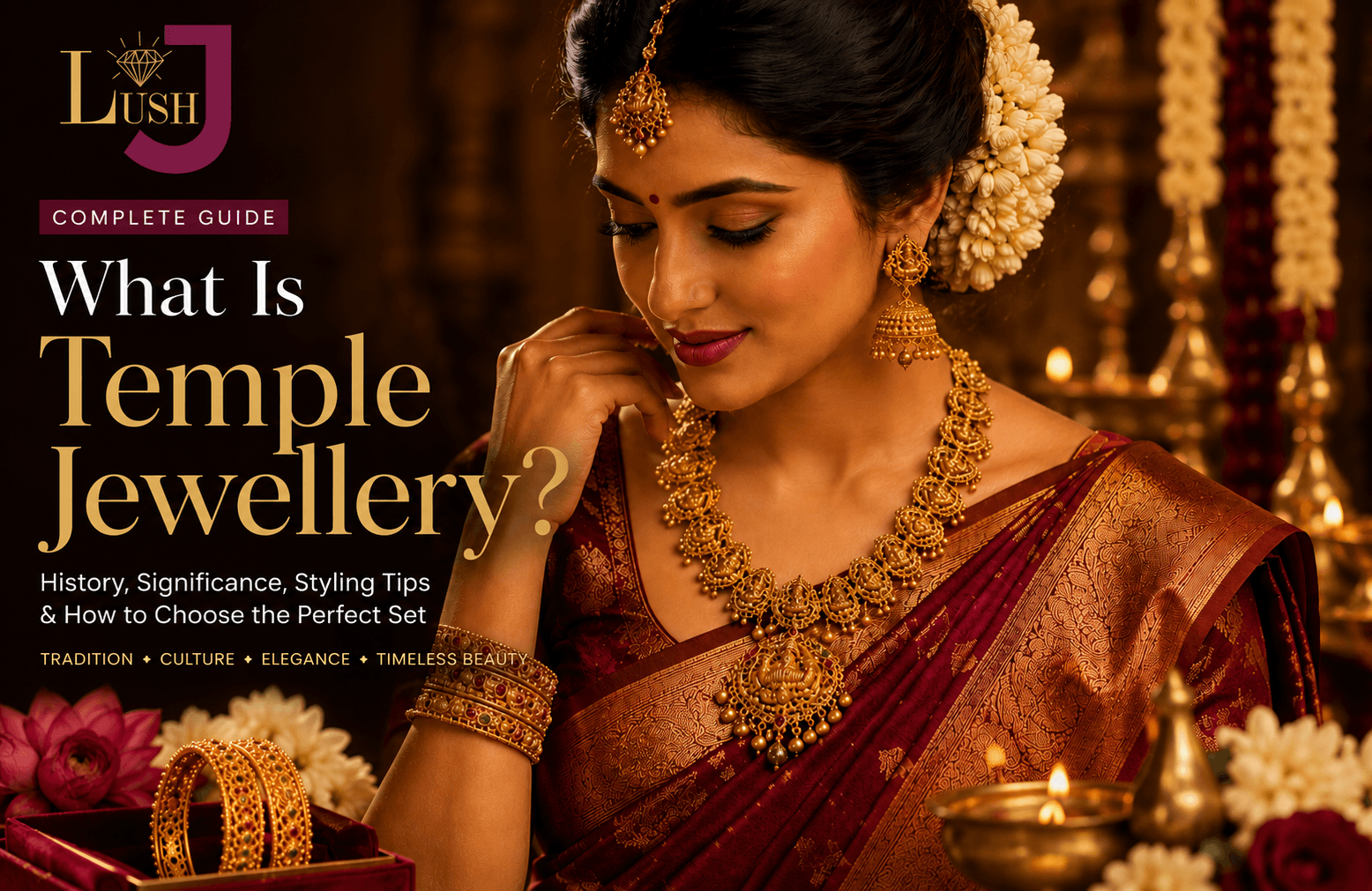
Have you ever looked at a South Indian bride and wondered why her jewellery looks so majestic?
Introduction
It’s hard not to notice. The rich gold finish, the intricate carvings, the graceful Lakshmi motifs, and the timeless elegance instantly stand out. That iconic style is known as Temple Jewellery—one of India’s oldest and most celebrated jewellery traditions.
But Temple Jewellery is much more than beautiful ornaments. Every necklace, earring, and bangle carries centuries of history, artistry, and cultural significance. Originally crafted to adorn Hindu deities inside South Indian temples, these exquisite designs gradually found their way into royal courts, classical dance performances, and eventually into the hearts of women across India.
Today, Temple Jewellery has become a favourite for weddings, festivals, religious ceremonies, and special family celebrations. Whether it’s a bride completing her dream wedding look, a Bharatanatyam dancer performing on stage, or someone dressing up for Diwali or Navratri, Temple Jewellery effortlessly brings together tradition and elegance.
If you’ve ever searched questions like “What is Temple Jewellery?”, “Is Temple Jewellery real gold?”, or “How do I style Temple Jewellery?”, you’re not alone. These are some of the most common questions people ask before investing in a Temple Jewellery set.
In this guide, we’ll answer all of them in simple, easy-to-understand language. You’ll discover the fascinating history behind Temple Jewellery, what makes it so unique, the different types available, how to style it beautifully, and practical tips to help you choose the perfect Temple Jewellery set for your collection.
Whether you’re buying your first Temple Jewellery necklace or simply curious about its rich heritage, this guide will help you appreciate why this timeless jewellery style continues to captivate generations.
What Is Temple Jewellery?
Before we dive into its history, let’s answer the question that brings most people here.
What exactly is Temple Jewellery?
Temple Jewellery is a traditional style of Indian jewellery inspired by ornaments that were originally handcrafted for Hindu deities in South Indian temples. Skilled artisans created elaborate necklaces, earrings, bangle set, waist belts, and crowns to decorate temple idols during religious ceremonies and festivals. Over time, these magnificent designs caught the attention of royal families, who began wearing similar jewellery as a symbol of prestige and devotion.
As the years passed, Temple Jewellery became deeply connected with classical Indian dance forms such as Bharatanatyam and Kuchipudi, where every piece complements the dancer’s graceful movements and expressive storytelling. Today, it has evolved into one of the most sought-after jewellery styles for brides and women who love traditional Indian fashion.
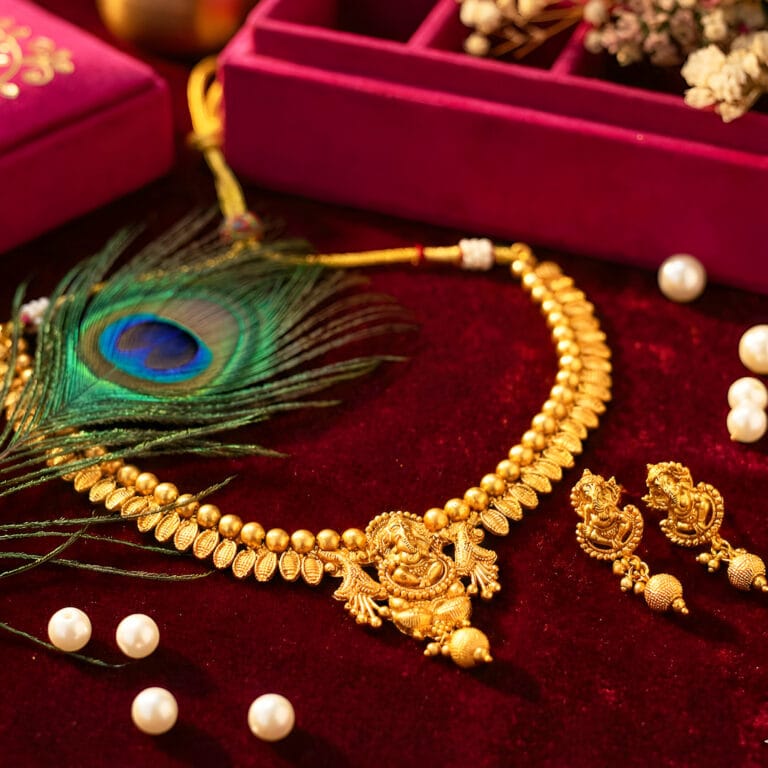
One of the reasons Temple Jewellery is so distinctive is its intricate craftsmanship. Instead of simple patterns, you’ll often find beautifully detailed motifs inspired by Indian culture and spirituality. Designs featuring Goddess Lakshmi, peacocks, elephants, lotus flowers, and traditional temple architecture are among the most recognisable. These symbols aren’t chosen just for their beauty—they also represent prosperity, wisdom, strength, purity, and good fortune.
While authentic Temple Jewellery was historically crafted in solid gold, today’s high-quality gold-plated Temple Jewellery offers the same regal appearance in a more practical and affordable way. This has made it a popular choice for weddings, festive celebrations, family functions, and cultural events without compromising on elegance.
What makes Temple Jewellery truly timeless is its ability to honour tradition while fitting beautifully into modern wardrobes. Pair it with a Kanjeevaram saree for a classic bridal look, style it with a silk kurta for festive celebrations, or wear a statement Temple necklace with a contemporary ethnic outfit—its charm remains unmatched.Complete the look with matching Temple Jewellery Set & Temple Jewellery bangle Set for a coordinated traditional appearance.
In many ways, Temple Jewellery isn’t just something you wear. It’s a celebration of India’s artistic heritage, craftsmanship, and traditions, passed down through generations and loved just as much today as it was centuries ago.
The Fascinating History of Temple Jewellery
Every piece of Temple Jewellery has a story to tell—and it begins centuries ago.
Long before Temple Jewellery became a bridal favourite, it was created as an offering of devotion. Skilled goldsmiths handcrafted elaborate ornaments exclusively for Hindu deities, adorning idols during daily rituals, grand festivals, and special ceremonies in South Indian temples. These ornaments weren’t simply decorative; they reflected faith, respect, and extraordinary craftsmanship.
As South India’s great kingdoms flourished, especially under the Chola and later the Vijayanagara dynasties, this distinctive jewellery style began to evolve beyond temple walls. Kings, queens, and noble families admired the intricate designs and commissioned similar pieces for royal occasions. What started as sacred temple adornment gradually became a symbol of prestige and cultural pride.
Temple Jewellery also became inseparable from India’s classical dance traditions. Dancers performing Bharatanatyam, Kuchipudi, and Mohiniyattam wore these ornate jewellery sets to portray grace, devotion, and storytelling on stage. Even today, it’s difficult to imagine a classical dance performance without the unmistakable beauty of Temple Jewellery.
Over the years, its appeal spread far beyond South India. Brides across the country embraced its timeless charm, while designers introduced lighter, gold-plated versions that preserved the traditional aesthetic without the cost of solid gold. A beautifully coordinated Temple Jewellery set can instantly elevate a bridal or festive look while preserving the elegance of traditional Indian craftsmanship.Today, Temple Jewellery is cherished not only for weddings but also for festivals, family celebrations, religious ceremonies, and cultural events.
Perhaps that’s what makes Temple Jewellery so special—it has adapted to modern fashion without losing its heritage. When you wear a beautifully crafted Temple Jewellery set today, you’re not just completing an outfit; you’re carrying forward an art form that has been admired for generations.
Why Is It Called Temple Jewellery?
It’s a question many first-time buyers ask, and the answer is surprisingly simple.
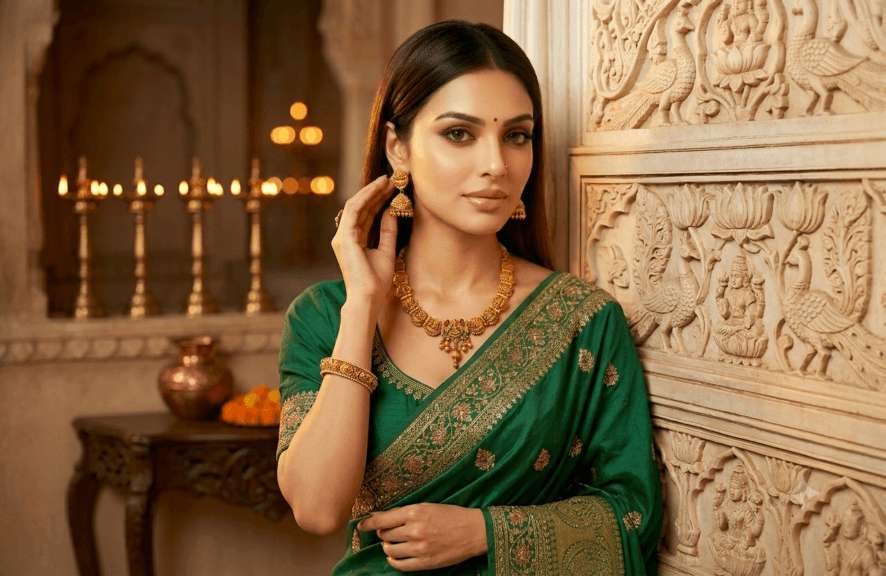
Temple Jewellery gets its name because these designs were originally crafted for Hindu temples in South India. Master artisans created intricate gold ornaments to decorate idols of deities such as Goddess Lakshmi, Lord Vishnu, Lord Ganesha and Lord Murugan during prayers, festivals, and religious ceremonies.
Over time, the same artistic style found its way into royal households and eventually became a treasured part of traditional Indian jewellery.
If you look closely at a Temple Jewellery necklace or pair of earrings, you’ll notice that the designs are unlike ordinary jewellery. Instead of simple geometric patterns, they’re filled with meaningful motifs inspired by Indian culture.
Some of the most recognisable include:
- Goddess Lakshmi – symbolising prosperity, abundance, and blessings.
- Peacocks – representing beauty and grace.
- Lotus flowers – associated with purity and spiritual growth.
- Elephants – symbolising strength, wisdom, and good fortune.
- Traditional temple carvings – reflecting the architectural beauty of ancient South Indian temples.
These details are what give Temple Jewellery its distinctive identity. Rather than following passing fashion trends, every piece celebrates India’s artistic heritage while remaining elegant enough for today’s weddings and festive occasions.
That’s why Temple Jewellery continues to hold a special place in Indian fashion—it doesn’t just complement traditional attire; it carries a legacy that has endured for centuries.
Types of Temple Jewellery
One of the reasons Temple Jewellery has remained timeless is its incredible variety. Whether you’re dressing for your wedding, attending a family function, or celebrating festivals like Diwali, Navratri, or Pongal, there’s a Temple Jewellery piece for every occasion.
Let’s explore the most popular styles.
Temple Jewellery Necklaces
The necklace is often the centrepiece of any Temple Jewellery set. Traditional designs feature intricate carvings of Goddess Lakshmi, floral patterns, peacocks, elephants, and temple-inspired motifs that immediately capture attention.
Some necklaces are designed as bold bridal pieces, while others are lightweight enough for festive celebrations or cultural events. If you’re unsure where to begin, browsing a few Temple Jewellery necklace sets can help you understand how matching earrings and pendants complete the overall look naturally.
Temple Jewellery Earrings and Jhumkas
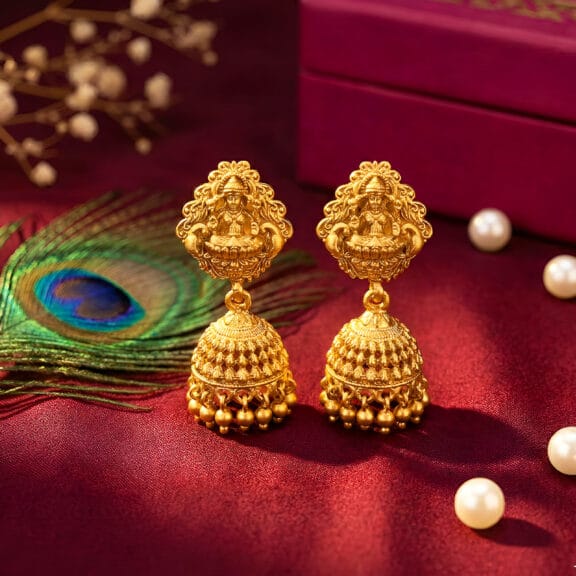
Temple Jhumkas are among the most loved traditional earrings in India. Their detailed craftsmanship and graceful movement instantly elevate even the simplest saree or lehenga.
Temple jhumkas perfectly complement temple necklaces. Their bell-shaped design, deity motifs and antique gold finish make them one of the most sought-after jewellery styles in India.
Whether you prefer classic Lakshmi jhumkas or smaller everyday designs, Temple Jewellery earrings offer a beautiful balance between elegance and tradition.
Temple Jewellery Bangles
A traditional bridal look rarely feels complete without matching bangles. Temple bangles often feature carved floral vines, deity motifs, and antique gold finishes that perfectly complement necklaces and earrings.
Temple jewellery bangles feature carved floral patterns, deity engravings and stone embellishments. Brides usually wear multiple bangles together to complete their South Indian bridal jewellery.
If you’re planning a coordinated festive outfit, explore matching Temple Jewellery bangles to create a balanced traditional look.
Temple Haram (Long Necklace)
A haram is the long necklace traditionally worn over a shorter choker or necklace. Temple harams often include multiple Lakshmi coins, intricate deity carvings and elaborate pendants.
This layered style instantly creates a regal South Indian bridal look.
Temple Jewellery Sets
For many women, choosing a complete matching set is the easiest way to achieve a polished traditional appearance.
Instead of selecting each piece individually, a coordinated Temple Jewellery set ensures that every necklace, earring, and pendant follows the same design language, making the entire ensemble look effortlessly elegant.
Temple Choker Set
Temple chokers sit close to the neck and are heavily decorated with Lakshmi motifs, kemp stones and antique detailing.
Many brides pair a choker with a long haram to create a balanced bridal jewellery combination.
Temple Maang Tikka
Temple maang tikkas feature miniature deity carvings or lotus-inspired designs placed at the centre of the forehead.
They are especially popular for weddings, Bharatanatyam performances and traditional South Indian ceremonies.
Temple Vanki (Armlet)
The Vanki, also called a bajuband, is a V-shaped armlet traditionally worn on the upper arm.
Originally associated with South Indian brides and classical dancers, it adds elegance while maintaining the temple aesthetic.
Temple Waist Belt (Oddiyanam)
One of the most iconic pieces of South Indian bridal jewellery is the Oddiyanam or temple waist belt.
It helps secure the saree while enhancing the bridal silhouette. Most designs feature Goddess Lakshmi surrounded by peacocks, elephants and floral carvings.
Temple Nose Ring (Nath)
Temple-inspired nose rings often incorporate floral motifs, pearls or tiny deity-inspired patterns.
While less common than necklaces or earrings, they beautifully complete a traditional bridal look.
Temple Anklets (Payal)
Although silver anklets remain traditional, antique gold-finish temple anklets are increasingly worn for dance performances, bridal photoshoots and festive occasions.
They add subtle elegance without overpowering the outfit.
Quick Styling Tip
You don’t need every temple jewellery piece to create a beautiful look. A Temple Necklace, Temple Jhumka Earrings, and Temple Bangles are often enough for festivals and family functions, while brides can elevate the ensemble by adding a Temple Haram, Maang Tikka, and Oddiyanam for a complete traditional appearance.
How to Style Temple Jewellery for Different Occasions
One of the biggest myths about Temple Jewellery is that it’s reserved only for brides. While it’s undeniably a bridal favourite, modern styling has made it surprisingly versatile.
Weddings
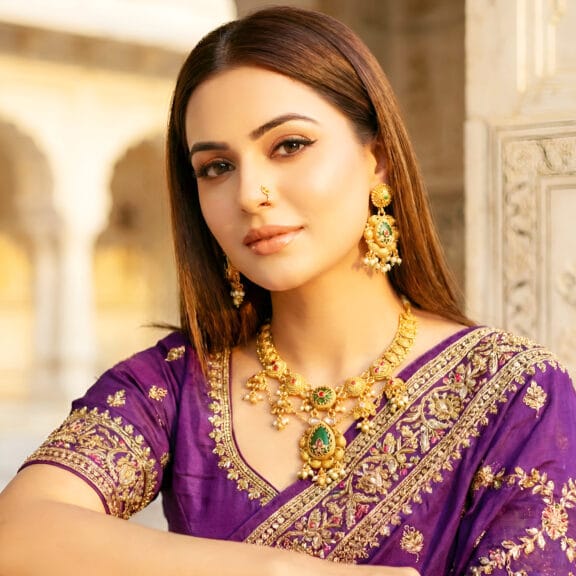
Nothing complements a silk saree quite like Temple Jewellery. Rich Kanjeevaram, Banarasi, or Mysore silk sarees naturally enhance the intricate gold detailing, creating a regal appearance that’s stood the test of time.
If you’re building your bridal jewellery wardrobe, exploring a complete Temple Jewellery collection can help you create a coordinated look rather than purchasing individual pieces at random.
Festivals
Celebrations like Diwali, Navratri, Durga Puja, Ugadi, Onam, and Pongal are wonderful occasions to wear traditional jewellery.
Instead of heavy bridal necklaces, many women choose lightweight Temple pendants or elegant jhumkas that add festive charm without feeling overwhelming.
If you’re looking for something comfortable yet traditional, our Temple Jewellery earrings are perfect for festive celebrations.
The jewellery doesn’t simply complement the costume—it becomes part of the storytelling itself.
Modern Indo-Western Styling
Traditional doesn’t have to mean old-fashioned.
Today, many women pair Temple Jewellery earrings with solid-colour kurtas, Indo-western dresses, or contemporary sarees to create a striking fusion look. A single statement necklace can also transform a minimalist outfit into something memorable.
If you enjoy experimenting with ethnic fashion, you’ll find plenty of inspiration throughout our Temple Jewellery collection.
How to Choose the Right Temple Jewellery
Buying Temple Jewellery isn’t just about selecting the prettiest design. A few thoughtful considerations can help you choose pieces you’ll genuinely enjoy wearing for years.
Think about:
- The occasion you’ll wear it for.
- Whether you prefer lightweight or statement jewellery.
- Your outfit colour and neckline.
- Matching earrings or bangles.
- Comfortable weight for extended wear.
- Secure clasps and quality craftsmanship.
- Traditional motifs that resonate with your personal style.
Rather than buying impulsively, it’s often worth comparing several Temple Jewellery sets before making your decision. Seeing different combinations side by side makes it much easier to identify the style that feels most like you
Caring for Temple Jewellery
Beautiful jewellery deserves proper care.
Although modern gold-plated Temple Jewellery is designed for durability, a few simple habits can help maintain its shine for much longer.
- Store each piece separately in a soft pouch.
- Keep jewellery away from perfumes, lotions, and hairsprays.
- Remove jewellery before bathing or swimming.
- Wipe gently with a soft microfiber cloth after use.
- Store in a cool, dry place.
If you’re purchasing high-quality gold-plated jewellery, following these care tips will help preserve its finish and appearance for years.
For a detailed guide, you may also enjoy reading our article on how to care for anti-tarnish jewellery.
Frequently Asked Questions (FAQ)
Is Temple Jewellery only worn by South Indian brides?
Can Temple Jewellery be worn with modern outfits?
What metal is Temple Jewellery made from?
Why does Temple Jewellery feature Goddess Lakshmi?
Is Temple Jewellery suitable for gifting?
Conclusion
Temple Jewellery is much more than a fashion accessory. It represents centuries of craftsmanship, devotion, and artistic heritage that continue to inspire women across generations. Whether you’re drawn to its intricate Lakshmi motifs, timeless elegance, or cultural significance, every piece carries a story that never goes out of style.
Today, Temple Jewellery has evolved beautifully, offering everything from grand bridal sets to lightweight festive designs that fit effortlessly into modern wardrobes. That means you don’t have to wait for a wedding to enjoy its beauty—you can celebrate tradition whenever the occasion feels special.
If you’re ready to discover jewellery inspired by this rich heritage, explore our carefully curated Temple Jewellery collection and find designs crafted to make every celebration unforgettable.
Great content! Keep up the good work!