
Your jewellery doesn’t lose its beauty overnight—it loses it through the little habits we often overlook.
Introduction
Have you ever opened your jewellery box while getting ready for a special occasion, picked up your favourite necklace or earrings, and thought, “This used to sparkle so much more.” It’s a little disappointing, isn’t it? After all, these are the pieces you’ve carefully chosen because they make you feel confident, complete your outfit and often remind you of a special celebration, a thoughtful gift or a memorable moment.
The truth is, most artificial jewellery doesn’t suddenly lose its beauty overnight. In fact, one of the biggest misconceptions I hear from customers is that artificial jewellery simply has a “short lifespan.” As someone who has spent years helping people choose jewellery that suits their style and budget, I can tell you that’s only half the story. More often than not, it’s the everyday habits—not the jewellery itself—that determine how long it continues looking beautiful.
You might wear jewellery every day for work, save your favourite pieces for festivals, or build a collection piece by piece — either way, learning how to care for artificial jewellery is one of the smartest things you can do. It doesn’t require expensive cleaning products or complicated routines. Instead, it comes down to understanding what your jewellery experiences every day and making a few small changes that protect it over time.
If you’re just beginning to build a collection you’ll wear regularly, choosing quality Anti Tarnish Jewellery can make everyday maintenance much easier because these pieces are designed to better withstand daily wear while still benefiting from proper care.
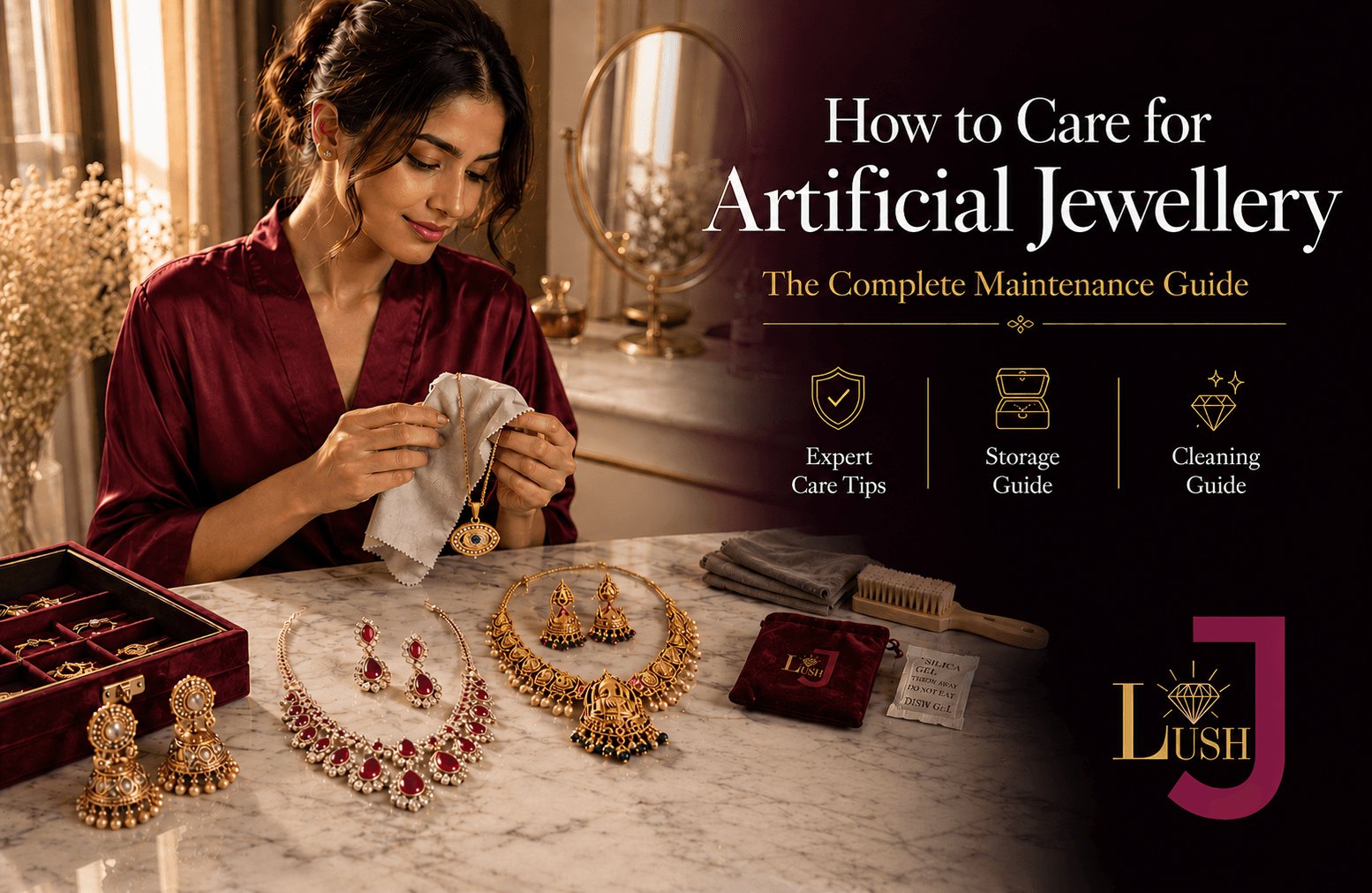
Take a moment to look at the image above.
Notice how jewellery care isn’t about complicated cleaning kits or expensive equipment. A soft microfiber cloth, an organised storage space and a few thoughtful habits are often all you need. Professional jewellers don’t rely on magic products—they rely on consistency. That’s exactly what this guide will help you build, not every jewellery style needs exactly the same care routine.
Sparkling AD Jewellery Sets should always be handled gently to protect their stones, while intricately crafted Temple Jewellery benefits from careful storage that preserves its beautiful antique finish. Long, delicate Kashmiri Earrings deserve special attention to prevent their delicate stems from bending, and elegant Snake Chains should always be stored flat to avoid twisting or permanent kinks. Understanding these small differences is what separates basic jewellery care from truly maintaining a collection.
If you’ve ever wondered why some jewellery is naturally easier to maintain than others, our guide on What Is Anti Tarnish Jewellery? explains what makes these pieces different and why they’re becoming one of the most popular choices for everyday wear.
Think about it this way. You wouldn’t buy a beautiful handbag only to leave it on the floor every evening, nor would you expect a favourite pair of shoes to stay spotless without ever cleaning them. Jewellery deserves exactly the same attention. Those extra thirty seconds you spend wiping a necklace before storing it or placing your earrings back into their own compartment instead of tossing them into a drawer can make an incredible difference over the years.
In the next few minutes, I’ll walk you through what actually causes artificial jewellery to dull, how to clean and store different pieces correctly, the everyday mistakes most people don’t realise they’re making, and what to do if jewellery ever irritates your skin.
The goal isn’t just to help your jewellery last longer. It’s to help you enjoy wearing every piece with the same confidence you felt the day you brought it home.
Why Proper Jewellery Care Matters
If there’s one thing I’ve learnt from speaking to jewellery lovers over the years, it’s this: people rarely regret buying jewellery they love—they regret not knowing how to care for it properly. I’ve met customers who believed their favourite necklace had reached the end of its life, only to discover that a few simple care habits could have kept it looking beautiful for much longer.
Artificial jewellery is made to add elegance, confidence and personality to your everyday style. But just like any accessory you use regularly, it experiences a lot more than we realise. Every time you wear a necklace, a pair of earrings or a bracelet, it comes into contact with your skin, body oils, perfume, makeup, dust and even changes in the weather. None of these things damage jewellery instantly, but together they slowly reduce its shine if they’re ignored for months.
One of the questions customers often ask me is:
“I only wear my jewellery occasionally. Do I still need to take care of it?”
Absolutely.
Even jewellery that spends most of its time inside a jewellery box isn’t completely protected. Humidity, dust and improper storage can affect it long before you decide to wear it again. That’s why proper storage is just as important as proper cleaning.
If your collection includes elegant AD Jewellery Sets that you wear for weddings, receptions or festive occasions, giving them a quick clean before storing them helps preserve the brilliance of their stones and prevents dust from settling into delicate settings.
Another common misconception is that more cleaning means better care. Surprisingly, the opposite is often true. Artificial jewellery doesn’t need aggressive scrubbing or strong chemical cleaners. In fact, harsh cleaning methods are one of the quickest ways to damage plating, loosen stones or reduce the beautiful finish that first caught your eye.
Good jewellery care isn’t about constantly cleaning your jewellery—it’s about cleaning it correctly.
🌸 LushJ Expert Tip
Treat your jewellery the same way you treat your favourite outfit.
After wearing it, take just 30 seconds to wipe it gently with a clean microfiber cloth before putting it away. This simple habit removes body oils, light dust and cosmetic residue before they have a chance to build up. It’s one of the easiest ways to help jewellery maintain its shine over time.
Different jewellery styles also deserve slightly different care routines because they’re crafted differently.
For example, beautifully detailed Temple Jewellery often features intricate patterns and antique-inspired finishes that benefit from careful handling and individual storage. Likewise, long handcrafted Kashmiri Earrings should never be squeezed into crowded compartments where their stems or intricate details can become bent or tangled. Understanding these small differences helps every jewellery piece stay in excellent condition for much longer.
The same principle applies to chains. A beautifully polished Snake Chain may look simple, but it’s one of the easiest jewellery styles to damage through improper storage. Folding or knotting it repeatedly can create permanent bends that are difficult to remove later. Storing it flat or hanging it neatly helps preserve both its flexibility and elegant appearance.
If you’re interested in understanding why different jewellery types require different levels of maintenance, our guides on What Is AD Jewellery? and What Is Temple Jewellery? explain the craftsmanship behind these styles and why a little extra care goes such a long way.
The best part is that none of this requires expensive products or hours of maintenance. Once you understand what actually causes jewellery to lose its beauty, the right care routine becomes second nature. In the next section, we’ll look at the everyday habits that quietly damage artificial jewellery—and, more importantly, the simple changes that will help your favourite pieces stay beautiful for years instead of months.
Why Does Artificial Jewellery Lose Its Shine?
Have you ever looked at an old photo and noticed your favourite jewellery looked brighter than it does today? Most people immediately assume the jewellery has reached the end of its life.
In reality, that’s rarely what happens.
Artificial jewellery usually doesn’t lose its beauty because it suddenly becomes “old.” Instead, its appearance changes gradually through hundreds of tiny moments that often go unnoticed. Every spray of perfume, every humid afternoon, every rushed morning when jewellery is tossed into a drawer instead of being stored properly—all of these small habits quietly leave their mark.
That’s actually good news.
Why?
Because if everyday habits are responsible for most of the wear, then everyday habits can also prevent it.
One jewellery set or twenty — understanding what affects your jewellery is the first step towards keeping it beautiful for years.”
The Biggest Enemies of Artificial Jewellery
One question customers often ask me is:
“If I’m careful while wearing my jewellery, why does it still lose its shine?”
The answer usually comes down to five everyday factors.
1. Moisture
Water itself isn’t always the problem.
The real issue is prolonged moisture.
After a long day, tiny amounts of sweat remain on jewellery. Bathrooms trap humidity. Damp jewellery boxes hold moisture longer than we realise. Over weeks and months, this environment slowly affects the finish.
That’s why I always recommend removing jewellery before showering, swimming or exercising—even if it’s only for a short while.
If everyday wear is your priority, investing in quality Anti Tarnish Jewellery gives you extra peace of mind because it’s designed to better resist daily exposure than many traditional fashion jewellery pieces. Even then, good care habits remain essential.
2. Perfume, Makeup & Skincare
Here’s a simple experiment.
Think about your morning routine.
Do you wear your jewellery first…
…or apply perfume first?
If it’s the first option, you’re definitely not alone.
Perfumes, deodorants, hair sprays, body lotions and even sunscreen contain ingredients that can gradually affect jewellery finishes when they come into direct contact with metal surfaces.
A simple change makes a surprisingly big difference:
Get completely ready first. Wear your jewellery last.
That one habit alone can help preserve your jewellery’s shine for much longer.
🌸 LushJ Expert Tip
Jewellery should always be the final step in getting ready—and the very first thing you remove when you get home.
It reduces exposure to cosmetics, lowers the chance of accidental snagging while changing clothes and immediately extends the life of your favourite pieces.
3. Dust & Everyday Dirt
Even jewellery you wear only occasionally isn’t immune to dust.
Over time, tiny particles mix with natural skin oils and cosmetic residue, creating a thin layer that dulls sparkle and makes metal surfaces appear lifeless.
This becomes especially noticeable with beautifully detailed AD Jewellery Sets, where dozens of finely set stones rely on clean surfaces to reflect light brilliantly. A quick wipe with a soft microfiber cloth after wearing them often makes a much bigger difference than people expect.
4. Improper Storage
Imagine placing a silk saree, a leather handbag and delicate embroidered dupatta into one drawer every day.
Sooner or later, something gets damaged.
Jewellery works exactly the same way.
When necklaces, earrings, bracelets and rings constantly rub against one another, tiny scratches begin appearing. Chains become tangled, delicate stems bend and decorative finishes wear faster than they should.
This is why long Kashmiri Earrings should always be stored separately or hung neatly instead of being squeezed into crowded compartments. Protecting their intricate craftsmanship takes very little effort but makes a huge difference over time.
Similarly, sleek Snake Chains should always be stored flat or hung individually. Folding or knotting them repeatedly can create permanent bends that are difficult to straighten later.
5. Everyday Friction
One cause people rarely think about is simple friction.
Jewellery rubbing against handbags, scarves, jacket collars or even other jewellery pieces creates tiny abrasions over time. They’re almost impossible to notice day by day, but after months of wear the finish gradually loses some of its original brilliance.
This doesn’t mean you should stop enjoying your jewellery.
It simply means being a little more mindful of how you wear and store it.
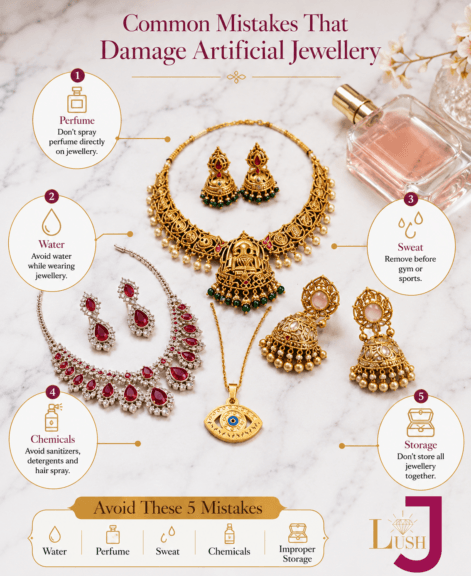
The infographic above highlights something I always tell customers:
Good jewellery care is usually about prevention, not repair.
Once plating begins wearing away or decorative finishes become damaged, restoring them isn’t always possible. Preventing the damage in the first place is far easier than trying to fix it later.
That’s exactly why the next section focuses on the simple daily habits that take less than a minute but can keep your jewellery looking beautiful for years.
Daily Jewellery Care Habits That Actually Work
One thing many buyers ask is:
“Do I need special jewellery cleaners to keep my jewellery looking new?”
Honestly?
Most people don’t.
The jewellery collections that stay beautiful for years usually belong to people who follow a few simple daily habits consistently rather than relying on expensive cleaning products every few months.
Here are three habits I recommend to almost every customer:
- Wear your jewellery last after skincare, makeup and perfume.
- Remove it first before changing clothes, showering or sleeping.
- Give it a gentle wipe with a clean microfiber cloth before storing it away.
These small habits take less than a minute, yet they can dramatically slow down everyday wear.
🌸 LushJ Expert Tip
Don’t wait until your jewellery looks dull before caring for it.
The easiest jewellery to restore is the jewellery that never became dirty in the first place. Thirty seconds of care today is worth much more than thirty minutes of cleaning later.
If your collection includes traditional Temple Jewellery, you’ll notice that gentle handling and individual storage help preserve its intricate antique-inspired finish far better than frequent deep cleaning. Our detailed guide on What Is Temple Jewellery? explains why these beautifully crafted pieces deserve a slightly different care routine from modern everyday jewellery.
Now that you understand what causes jewellery to lose its shine, the next step is learning exactly how to clean artificial jewellery safely without accidentally damaging its plating, stones or finish. That’s where many people unknowingly make mistakes, and that’s exactly what we’ll cover next.
How to Clean Artificial Jewellery Safely (Without Damaging It)
One of the biggest mistakes I see people make is assuming that if jewellery looks dull, it simply needs more cleaning.
Ironically, that’s often what causes the damage.
Artificial jewellery isn’t designed to be scrubbed aggressively like stainless steel kitchenware or soaked in strong cleaning solutions. The beautiful plating, decorative finishes and delicate stone settings that make artificial jewellery look luxurious also require a much gentler approach.
The goal isn’t to make your jewellery sparkle by using harsh products.
The goal is to remove dirt while protecting the finish.
Think of it like washing delicate silk instead of denim. Both need cleaning, but they certainly shouldn’t be treated the same way.
Step 1: Dust Before You Clean
Before introducing any moisture, gently remove loose dust using a clean microfiber cloth or an ultra-soft makeup brush.
Many people skip this step and immediately start wiping jewellery with a damp cloth. Unfortunately, tiny dust particles can behave like very fine sandpaper when rubbed across plated surfaces.
A gentle dry wipe first helps prevent unnecessary micro-scratches while also removing makeup residue and everyday dust.
This simple habit works particularly well for AD Jewellery Sets, where tiny stones easily trap cosmetic residue and fine dust between their settings.
Step 2: Use Only a Slightly Damp Cloth
If your jewellery needs a deeper clean, lightly dampen a microfiber cloth using clean water.
Notice the word lightly.
The cloth should feel slightly damp—not wet enough to drip.
Carefully wipe the surface of the jewellery before immediately drying it with another soft cloth.
Leaving moisture sitting on jewellery for long periods is one of the most common reasons finishes gradually lose their shine.
🌸 LushJ Expert Tip
Never clean jewellery immediately after removing it.
Allow it to return to room temperature first, especially after spending hours outdoors in hot weather. This prevents unnecessary moisture from becoming trapped while you’re cleaning.
Step 3: Clean Around Stones—Not Over Them
One of the most common cleaning mistakes involves rubbing directly over decorative stones.
Instead, gently clean around the stones using a cotton bud or a soft brush.
This removes trapped dirt without putting unnecessary pressure on the stone settings.
If you own beautifully detailed Temple Jewellery, this same gentle approach also protects the intricate carvings and antique-inspired finish that make these traditional designs so unique.
Step 4: Dry Completely Before Storing
This sounds obvious, yet it’s probably one of the most overlooked steps.
Never return jewellery to a jewellery box while it’s still slightly damp.
Even tiny amounts of trapped moisture can gradually affect plated finishes when jewellery remains stored for weeks.
After cleaning, leave every piece on a clean microfiber cloth for several minutes before placing it back inside its storage box.
That extra patience is often what separates jewellery that stays beautiful for years from jewellery that gradually becomes dull.
Cleaning Products You Should Avoid
Whenever someone asks me,
“Can I clean my jewellery using toothpaste?”
my answer is almost always the same:
Please don’t.
Although toothpaste is often recommended online, most formulas contain mild abrasives designed to polish tooth enamel—not delicate jewellery finishes.
The same applies to:
- Bleach
- Strong household cleaners
- Alcohol-based cleaners
- Acetone
- Harsh jewellery dips
- Rough scrubbing pads
- Steel wool
- Hard-bristled brushes
These products may appear to clean jewellery initially, but they often remove far more than dirt.
They can gradually damage plating, reduce shine and shorten the lifespan of decorative finishes.
Different Jewellery Types Need Different Care
Not every jewellery piece should be cleaned exactly the same way.
For example, a sleek Snake Chain should simply be wiped along its length rather than bent repeatedly while cleaning. Long Kashmiri Earrings should always be supported while cleaning to avoid unnecessary pressure on their stems and handcrafted details.
Likewise, Anti Tarnish Jewellery usually requires less frequent cleaning than conventional fashion jewellery, but regular wiping and proper storage remain just as important if you want to preserve its premium finish. If you’re curious about what makes these pieces different, our guide on How To Style Artificial Jewellery? and our buying guide on Best Artifical Jewellery India? explains the fashion sense and care behind them in much greater detail.
Cleaning is only half the story.
In my experience, jewellery is far more often damaged by poor storage than by poor cleaning. The way you store your jewellery every single day has a much bigger impact than most people realise.
Let’s look at how to store artificial jewellery properly so every piece stays organised, protected and ready to wear whenever you need it.
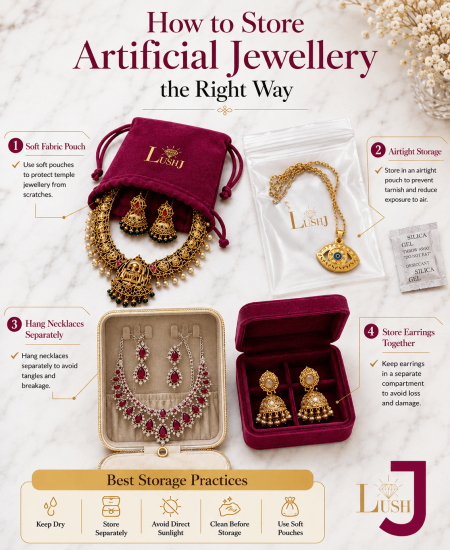
How to Store Artificial Jewellery Properly
If I had to choose just one habit that makes the biggest difference to the lifespan of artificial jewellery, it wouldn’t actually be cleaning.
It would be proper storage.
That often surprises people.
Many jewellery lovers spend time carefully cleaning their favourite necklace or earrings, only to toss everything back into the same drawer a few minutes later. Unfortunately, that’s where much of the unnecessary wear begins.
Think about your jewellery box for a moment.
Are necklaces tangled together?
Are earrings rubbing against bangles?
Are bracelets stacked on top of pendants?
If the answer is yes, your jewellery is slowly wearing down even when you aren’t wearing it.
The good news is that fixing this doesn’t require buying an expensive jewellery organiser. A few thoughtful storage habits can dramatically increase the life of your jewellery collection.
Give Every Jewellery Piece Its Own Space
Artificial jewellery should never be treated like loose accessories.
Every piece deserves its own space.
When jewellery constantly rubs against other jewellery, tiny scratches begin forming on plated surfaces. Decorative stones can loosen, chains become tangled and delicate finishes gradually lose their original shine.
If you own multiple jewellery styles, organising them separately makes everyday use much easier too.
For example:
- Store AD Jewellery Sets inside individual zip pouches or soft-lined compartments to protect their delicate stone settings.
- Keep Temple Jewellery in separate fabric pouches so its intricate antique finish doesn’t rub against harder metal surfaces.
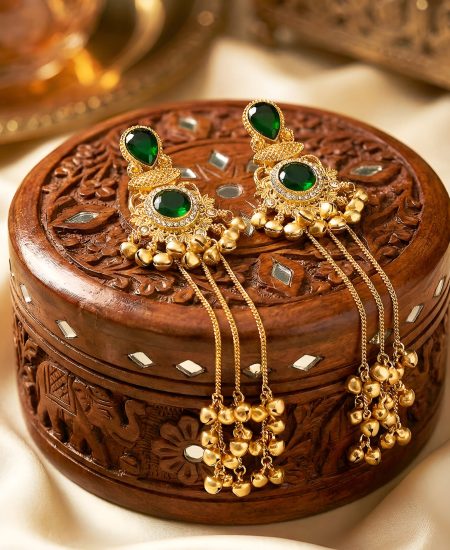
- Hang or individually store Kashmiri Earrings to protect their long handcrafted stems from bending.
- Lay Snake Chains completely flat or hang them vertically to prevent permanent twists and kinks.
These small habits take only seconds but can add years to the life of your jewellery collection.
Never Store Jewellery While It’s Damp
Imagine washing your favourite silk outfit and immediately folding it into a cupboard before it’s completely dry.
You probably wouldn’t.
Jewellery deserves exactly the same patience.
Even if you’ve only wiped your jewellery with a damp microfiber cloth, allow every piece to dry naturally before placing it back into your jewellery organiser.
Tiny amounts of trapped moisture may seem harmless today, but over weeks and months they can slowly affect plated finishes.
This is especially important during monsoon season or if you live in a humid environment where moisture naturally stays trapped for longer.
🌸 LushJ Expert Tip
If you’ve been wearing jewellery throughout the day, leave it on a clean microfiber cloth for 10–15 minutes before storing it.
This simple habit allows any remaining body moisture to evaporate naturally and significantly reduces the risk of long-term dullness.
Avoid Direct Sunlight & Heat
Most people think jewellery only needs protection from water.
Heat can be just as damaging.
Leaving jewellery on a sunny windowsill, inside a parked car or close to heaters exposes it to unnecessary temperature changes that may gradually affect decorative finishes, adhesives and plating over time.
A cool, dry cupboard or dedicated jewellery organiser is always the safest choice.
Travel Smart With Your Jewellery
Travelling is one of the easiest times for jewellery to become scratched or tangled.
Instead of placing everything into one cosmetic pouch, carry jewellery separately.
Use:
- Small zip pouches
- Soft fabric bags
- Individual compartments
- Travel jewellery organisers
This keeps necklaces from knotting, earrings from scratching other pieces and bracelets from rubbing against decorative stones.
If you’re travelling with occasion wear like Temple Jewellery or sparkling AD Jewellery, taking two extra minutes to pack each set separately can save hours of untangling later.
Keep Jewellery Away From Everyday Chemicals
Storage isn’t only about where you keep jewellery.
It’s also about what you keep it near.
Avoid storing jewellery beside:
- Perfumes
- Nail polish remover
- Aerosol sprays
- Household cleaning products
- Strong room fresheners
These products release chemicals that may gradually affect decorative finishes if jewellery remains exposed for long periods.
A dedicated jewellery organiser away from cosmetics is always a better choice.
A Well-Organised Jewellery Box Saves More Than Time
One thing I’ve noticed after helping hundreds of customers is that people who organise their jewellery properly don’t just have jewellery that lasts longer—they actually wear more of it.
When every necklace, bracelet and pair of earrings is easy to see, you’re more likely to enjoy your collection instead of wearing the same few pieces repeatedly.
Good storage protects your investment, saves time while getting ready and helps every jewellery piece remain as beautiful as the day you added it to your collection.
Now that we’ve covered cleaning and storage, there’s one final area that deserves attention.
Some jewellery damage isn’t caused by age, moisture or dust at all—it’s caused by small mistakes almost everyone makes without realising it.
Before we finish this guide, let’s look at the most common jewellery care mistakes, how to avoid them, simple DIY solutions if jewellery causes mild skin sensitivity, and answer the questions customers ask me most often. This final section will bring everything together into a complete care routine.
Common Jewellery Care Mistakes Almost Everyone Makes
One of the reasons I enjoy talking to customers about jewellery care is because I hear the same questions—and the same myths—again and again.
Most people don’t intentionally damage their jewellery.
They’re simply following advice they’ve heard from friends, social media or old home remedies that aren’t always suitable for modern artificial jewellery.
Let’s clear up some of the most common mistakes.
❌ Mistake 1: Wearing Jewellery in the Shower
It may seem harmless, especially if you’re only stepping in for a few minutes.
However, soap, shampoo, conditioner and warm water all leave behind residues that gradually affect plated finishes. Repeated exposure can also reduce the brilliance of decorative stones.
Simple solution:
Remove jewellery before showering and put it back on only after you’ve finished your skincare and fragrance routine.
❌ Mistake 2: Sleeping With Jewellery On
After a long day, it’s easy to forget you’re still wearing your favourite chain or earrings.
Unfortunately, jewellery rubs against pillows and bedsheets throughout the night.
That repeated friction can:
- Bend earring posts
- Twist chains
- Loosen stone settings
- Create unnecessary scratches
Taking jewellery off before bed only takes a few seconds but can significantly extend its lifespan.
❌ Mistake 3: Believing “More Cleaning Is Better”
Many people think frequent deep cleaning automatically means better maintenance.
Actually, excessive cleaning often causes more damage than regular wear.
Artificial jewellery usually benefits more from:
- Gentle wiping after each use
- Proper storage
- Occasional careful cleaning
rather than repeated scrubbing.
🌸 LushJ Expert Tip
Think preventive care—not corrective care.
If you spend thirty seconds caring for your jewellery after wearing it, you’ll rarely need to spend thirty minutes trying to restore its shine later.
❌ Mistake 4: Throwing Everything Into One Jewellery Box
This is probably the fastest way to create tangled chains and scratched finishes.
Separate storage isn’t about being organised.
It’s about reducing unnecessary contact between jewellery pieces.
Soft pouches, divided organisers and individual compartments all work wonderfully.
❌ Mistake 5: Ignoring Jewellery After Festivals & Weddings
Wedding jewellery often stays inside its box for months after a celebration.
Before storing it away:
✔ Wipe every piece gently.
✔ Ensure it’s completely dry.
✔ Store each jewellery set separately.
Future you will definitely appreciate the effort.
What If Artificial Jewellery Causes Mild Skin Sensitivity?
This is another question customers ask quite frequently.
First, it’s important to understand that skin sensitivity isn’t always an allergy to the jewellery itself.
Sometimes the irritation is caused by:
- Sweat trapped beneath jewellery.
- Cosmetic residue.
- Friction during long hours of wear.
- Individual skin sensitivity to certain metals.
If irritation continues or becomes severe, it’s always best to stop wearing the jewellery and seek advice from a qualified healthcare professional or dermatologist.
However, for mild irritation, a few practical precautions often help.
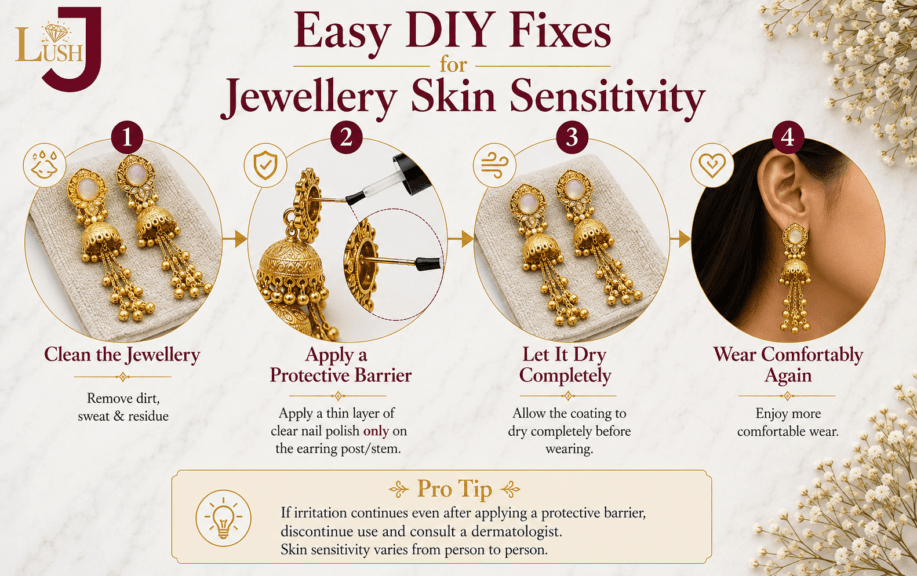
1. Apply Transparent Nail Polish on Contact Points
One of the oldest jewellery tricks still works surprisingly well.
A thin layer of clear (transparent) nail polish creates a temporary barrier between the metal and your skin.
Allow it to dry completely before wearing the jewellery.
Reapply whenever the coating begins wearing away.
For long Kashmiri Earrings, apply the clear nail polish only on the earring stem (post)—the part that passes through the ear piercing. This creates a protective barrier without affecting the appearance of the handcrafted design.
2. Wear Jewellery on Clean, Dry Skin
Avoid wearing jewellery immediately after applying body lotion or sunscreen.
Allow your skincare products to absorb first before putting jewellery on.
3. Give Your Skin A Break
If you’re wearing statement jewellery during weddings or festivals, remove it once the event is over instead of continuing to wear it for the rest of the day.
Both your skin and your jewellery benefit from occasional breaks.
4. Keep Jewellery Clean
Sometimes irritation isn’t caused by metal at all.
It can simply be the result of sweat, dust or cosmetic residue building up over time.
Regular gentle cleaning reduces this possibility considerably.
Frequently Asked Questions (FAQs)
How often should I clean artificial jewellery?
Can artificial jewellery last for years?
High-quality artificial jewellery can last for many years when it's cleaned gently, stored properly and protected from moisture, perfumes and harsh chemicals.
Is it safe to wear artificial jewellery every day?
especially if you choose quality pieces and follow good daily care habits. Collections such as Anti Tarnish Jewellery are particularly suitable for regular wear because they're designed to better withstand everyday use.
Can I clean jewellery using toothpaste?
What's the best way to store necklaces?
If you have a necklace set make sure you keep them safely in their respective box with proper care.
Why does my jewellery become dull even when I rarely wear it?
Should I wear jewellery while swimming?
Chlorine and salt water may gradually affect decorative finishes and plated surfaces.
Can I wear perfume while wearing jewellery?
Which jewellery requires the most careful handling?
What's the easiest habit to make jewellery last longer?
Final Thoughts
Jewellery is more than something that completes an outfit.
It’s part of the memories you create—whether it’s the earrings you wore on your first festive celebration, the necklace that made you feel confident at a wedding, or the Snake Chain you wear every day because it effortlessly matches almost everything in your wardrobe.
Looking after those pieces doesn’t require expensive products or complicated routines.
It simply requires a little consistency.
Clean gently.
Store thoughtfully.
Wear carefully.
And treat every piece with the same care you’d give any accessory you truly value.
Do that, and your jewellery will continue looking beautiful long after trends have changed.
If you’re looking to build a collection that’s both stylish and easier to maintain, explore LushJ’s carefully curated collections of Anti Tarnish Jewellery, AD Jewellery, Temple Jewellery, Kashmiri Earrings, and versatile Snake Chains—all selected to help you enjoy beautiful jewellery with confidence for years to come.